Showing posts with label theatre. Show all posts
Tuesday, 21 May 2013
Saturday, 18 May 2013
Characters & Their Costumes
Friday, 10 May 2013
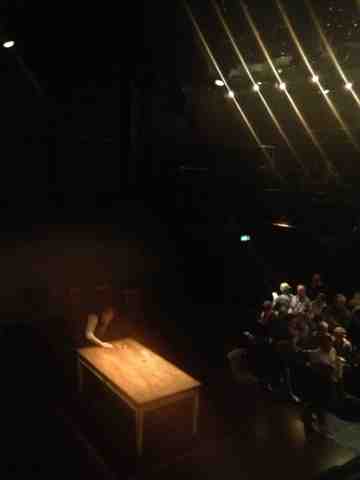
"Table"
Amazing! Just, amazing! Possibly the best thing I've ever seen in my entire life.The collaboration of a well-written play with a touching message about family ancestry and relationships; backed with incredible acting, singing and choreographed movement made for a spectacular show.
At the beginning, things don't make sense. I didn't quite understand it all. However, it was so engaging, well performed, and consequently I could enjoy it greatly it even without fully comprehending all the character's relationship's. As it starts to piece together, and things start to click the performance became more and more enjoyable. By the end, the audience was on the edge of their seats.
There was an emotional journey, with highs of laughter and moments of pure emotion, sadness, anger, regret, sympathy. I found it astonishing how in one piece of theatre there could be such a contrast in laughter and comedy and then a silent room of audience members choking up.
Another aspect of the play that I was very impressed with, was that the cast (9 members) play six generations of family members, and people in their lives. Consequently one actor will be playing many parts, both incredibly different in character and age, yet it was so credible that a fifty-something year old actor could go from playing a grandfather to a child, and both were as believable as each other.
A highlight for me, is the 'hippy' scene. The characters are living in a communal home and are having their weekly meeting to raise issues of concern but have to speak in turn, by using 'the stone'. The manic but well choreographed movements along with the comedy just make for a spectacular scene.Written by Tanya Ronder and directed by Rufus Norris; this special play family, heritage, and one precious piece of furniture is, without-a-shadow of a doubt, a must-see!
Saturday, 4 May 2013
'Clydebourne Park' by Bruce Norris
![]() |
| Poster from Putney Arts Centre |
This was a very enjoyable performance of both a witty and meaningful play. I had never seen or heard of this play before and immediately appreciated it. Later did I find out it was the most successful new play of 2011and is the only play to ever win the Pulitzer Prize for drama as well as the Olivier, Evening Standard and Tony awards.
The twist of how a Chicago neighborhood turns from elitely white to black is clever and I like the way the characters in the first act all play the characters in the second act.
| Set for Act One Photography by: Marina Bussandri |
| Scene from Act One Photography by: Marina Bussandri |
The Reverand character in Act One wore a wig (he was bald and used that look in Act Two). I understand needing to make a distinction between the two characters however the wig used was almost like an Elvis wig which was very distracting and in conjunction with the actor's terribly false American accent, almost took the play into a level of slapstick rather than actual humor.
However on the whole I really enjoyed this show, and was amazed at some of the performances given.
| Scene from Act Two Photography by: Marina Bussandri |
DirectorIan I
Ian Higham
Director
Ian Higham
Cast
Russ/Dan - Michael Rossi
Bev/Kathy - Amanda Benzecry
Karl/Steve - Richard Brent
Betsy/Lindsey - Elly Lacey
Francine/Lena - Ade Gbinigie
Albert/Kevin - Brian Yansen
Jim/Tom - Charles Golding
Ian Higham
Cast
Russ/Dan - Michael Rossi
Bev/Kathy - Amanda Benzecry
Karl/Steve - Richard Brent
Betsy/Lindsey - Elly Lacey
Francine/Lena - Ade Gbinigie
Albert/Kevin - Brian Yansen
Jim/Tom - Charles Golding
Ian Higham
Cast
Russ/Dan - Michael Rossi
Bev/Kathy - Amanda Benzecry
Karl/Steve - Richard Brent
Betsy/Lindsey - Elly Lacey
Francine/Lena - Ade Gbinigie
Albert/Kevin - Brian Yansen
Jim/Tom - Charles Golding
Cast
Russ/Dan - Michael Rossi
Bev/Kathy - Amanda Benzecry
Karl/Steve - Richard Brent
Betsy/Lindsey - Elly Lacey
Francine/Lena - Ade Gbinigie
Albert/Kevin - Brian Yansen
Jim/Tom - Charles Golding
Friday, 19 April 2013
Character Analysis: "The Importance of Being Earnest".
John (Jack/Earnest) Worthing, J.P
*Protagonist
*Represents conventional Victorian values, such as: duty, courtship, respectability.
*Hypcritically flouts these characteristics.
*He knows what's expected from Victorian society.
*Escapes the boundaries of his real life and respectability by going to the city and indulging in the actions and behaviours he pretends to disapprove of in his 'brother'.
*Leads a double life (Jack in the country/ Earnest in the city).
*Initals after his name stand for Justice of Peace, a legal judge.
*Feels less at home in aristocratic society as he is a foundling.
*Ironically called his brother Earnest, as in fact deceiving everyone.
*Represents hypocrisy in Victorian morality.
*Denies to himself and others his moral wrongdoing.
Algernon Moncrieff
*Friend of Jack from the city, secondary hero.
*Self absorbed, stylish, witty, idle, charismatic, a decorative bachelor.
*Swears to never to marry, but falls in love with Cecily (Jack's ward)
*Speaks in paradoxical and epigrammatic pronouncements.
*Living is an art form (embodies this view of Oscar Wilde), life is art, something one creates oneself.
*Disrespects the society he is to inherit.
*No moral convictions, he feels his only duty is to live beautifully.
*Like Jack, creates a fictional character "Bunbury" to escape his responsibilities and leave the city to avoid social engagements.
*Propoenent of aestheticism.
*Takes innocent delight in his ingenuity, acknowledges his wrongdoing and revels in it.
*Doesn't take himself seriously.
*Upper class, opulent living.
*Hedonist.
Gwendolen Fairfax
*Represents conventional Victorian womanhood.
*Bent on self-improvements, she has ideas and ideals and attends lectures.
*Cosmopolitan and pretentious.
*Elegant fashion and sophistication.
*Daughter of Lady Bracknell, similar outrageous pronouncements and speaks with an air of authority.
*Her consciousness of self-image clouds her judgement.
*She is the dominant aggressive partner in the relationship with Jack (inverted traditional gender roles)
*Her movements and speech is very calculated.
*Fixated on the name "Earnest" (metaphor for Victorian middle and upper classes obsession with virtue and honor).
Cecily Cardew
*Child of nature, lives in the country, the traditional home of innocence.
*Antithesis of Gwendolen.
*Young and pretty.
*Dresses and wears her hair simply.
*Her innocence is contrasted with her fascination of wickedness. She falls for Jack's brother Earnest, from hearing his wicked tales and bad reputation.
*Unwillingness to 'improve'.
*Superficial, only interested in marrying a man named Earnest, like Gwendolen.
*She invented and elaborate romance with Earnest, this fantasisim is similar to Jack and Algernon.
*Perfect mate for Algernon, given to creating fictions. Again embodies the view that life is a work of art, so represented in her journal and correspondence with Earnest.
*A romantic.
Lady Bracknell
*Antagonist of the play, blocks both potential marriages.
*Aunt of Algernon, mother of Gwendolen.
*Only character without a foil of partner (Jack/ Gwen, Algy/ Cecily, Miss Prism/ Chausable, Lane/ Merriman)
*Passes judgement on other's behaviour, not silently.
*Archetypal upper class Victorian matron. Typical Victorian Classicism.
*Embodies rules and traditions of society.
*Insists Gwendolen should not marry beneath her, has made it her life's goal to make Gwendolen follow in her footsteps).
*Fixated on appearances at the expense of reality (trapped in a web of superficiality).
*Primary representative of conventional Victorian morality.
* Snobbish, domineering, cunning, narrow-minded and authoritarian.
*Lacking in compassion, cares nothing about humane aspects disrupted in Jack's childhood.
*Her outrageous pronouncements, and lack of awareness of how ridiculous they are, make her a funny and likeable character.
Miss Prism
*Cecily's governess.
*Name suggests she has all the apparent respectability and moral severity expected of a Victorian governess, but she has a hidden past.
*Secret life as a novelist, suggest her to be a romantic and artistic underneath her stern exterior.
*Stern, rigid.
*Source of pedantic bromides and clichés.
*Hrshly criticizes Jack's brother.
*She entertains romantic feeling for Dr. Chasuble, but as he is a priest is prohibited from telling him directly.
Rev. Canon Chausable, D.D
*Initials after the name (D.D) stand for Doctor of Divinity.
*He is the local vicar in Jack's area of the country.
*Typical vicar type but similar in age to Miss Prism.
*Easy-going, postivive.
*Jack and Algernon ask him to christen them both, at separate times, "Earnest".
*Though celibate entertains romantic feelings for Miss Prism, good match for the educated lady.
Lane
*Algernon's butler.
*not passive, deliver droll lines and comments.
*Knows about bunburying at the beginning of the play .
Merriman
*Jack's butler in the manor house, country estate.
*In Acts II & III.
*In one scene forces bickering between Gwendolen and Cecily to maintain 'polite'.
*Protagonist
*Represents conventional Victorian values, such as: duty, courtship, respectability.
*Hypcritically flouts these characteristics.
*He knows what's expected from Victorian society.
*Escapes the boundaries of his real life and respectability by going to the city and indulging in the actions and behaviours he pretends to disapprove of in his 'brother'.
*Leads a double life (Jack in the country/ Earnest in the city).
*Initals after his name stand for Justice of Peace, a legal judge.
*Feels less at home in aristocratic society as he is a foundling.
*Ironically called his brother Earnest, as in fact deceiving everyone.
*Represents hypocrisy in Victorian morality.
*Denies to himself and others his moral wrongdoing.
Algernon Moncrieff
*Friend of Jack from the city, secondary hero.
*Self absorbed, stylish, witty, idle, charismatic, a decorative bachelor.
*Swears to never to marry, but falls in love with Cecily (Jack's ward)
*Speaks in paradoxical and epigrammatic pronouncements.
*Living is an art form (embodies this view of Oscar Wilde), life is art, something one creates oneself.
*Disrespects the society he is to inherit.
*No moral convictions, he feels his only duty is to live beautifully.
*Like Jack, creates a fictional character "Bunbury" to escape his responsibilities and leave the city to avoid social engagements.
*Propoenent of aestheticism.
*Takes innocent delight in his ingenuity, acknowledges his wrongdoing and revels in it.
*Doesn't take himself seriously.
*Upper class, opulent living.
*Hedonist.
Gwendolen Fairfax
*Represents conventional Victorian womanhood.
*Bent on self-improvements, she has ideas and ideals and attends lectures.
*Cosmopolitan and pretentious.
*Elegant fashion and sophistication.
*Daughter of Lady Bracknell, similar outrageous pronouncements and speaks with an air of authority.
*Her consciousness of self-image clouds her judgement.
*She is the dominant aggressive partner in the relationship with Jack (inverted traditional gender roles)
*Her movements and speech is very calculated.
*Fixated on the name "Earnest" (metaphor for Victorian middle and upper classes obsession with virtue and honor).
Cecily Cardew
*Child of nature, lives in the country, the traditional home of innocence.
*Antithesis of Gwendolen.
*Young and pretty.
*Dresses and wears her hair simply.
*Her innocence is contrasted with her fascination of wickedness. She falls for Jack's brother Earnest, from hearing his wicked tales and bad reputation.
*Unwillingness to 'improve'.
*Superficial, only interested in marrying a man named Earnest, like Gwendolen.
*She invented and elaborate romance with Earnest, this fantasisim is similar to Jack and Algernon.
*Perfect mate for Algernon, given to creating fictions. Again embodies the view that life is a work of art, so represented in her journal and correspondence with Earnest.
*A romantic.
Lady Bracknell
*Antagonist of the play, blocks both potential marriages.
*Aunt of Algernon, mother of Gwendolen.
*Only character without a foil of partner (Jack/ Gwen, Algy/ Cecily, Miss Prism/ Chausable, Lane/ Merriman)
*Passes judgement on other's behaviour, not silently.
*Archetypal upper class Victorian matron. Typical Victorian Classicism.
*Embodies rules and traditions of society.
*Insists Gwendolen should not marry beneath her, has made it her life's goal to make Gwendolen follow in her footsteps).
*Fixated on appearances at the expense of reality (trapped in a web of superficiality).
*Primary representative of conventional Victorian morality.
* Snobbish, domineering, cunning, narrow-minded and authoritarian.
*Lacking in compassion, cares nothing about humane aspects disrupted in Jack's childhood.
*Her outrageous pronouncements, and lack of awareness of how ridiculous they are, make her a funny and likeable character.
Miss Prism
*Cecily's governess.
*Name suggests she has all the apparent respectability and moral severity expected of a Victorian governess, but she has a hidden past.
*Secret life as a novelist, suggest her to be a romantic and artistic underneath her stern exterior.
*Stern, rigid.
*Source of pedantic bromides and clichés.
*Hrshly criticizes Jack's brother.
*She entertains romantic feeling for Dr. Chasuble, but as he is a priest is prohibited from telling him directly.
Rev. Canon Chausable, D.D
*Initials after the name (D.D) stand for Doctor of Divinity.
*He is the local vicar in Jack's area of the country.
*Typical vicar type but similar in age to Miss Prism.
*Easy-going, postivive.
*Jack and Algernon ask him to christen them both, at separate times, "Earnest".
*Though celibate entertains romantic feelings for Miss Prism, good match for the educated lady.
Lane
*Algernon's butler.
*not passive, deliver droll lines and comments.
*Knows about bunburying at the beginning of the play .
Merriman
*Jack's butler in the manor house, country estate.
*In Acts II & III.
*In one scene forces bickering between Gwendolen and Cecily to maintain 'polite'.
Friday, 12 April 2013
The Curious Incident...
Realistic family dynamic.
Protagonist very credible.
Fiddles with hoody, aids the illusion of his aspringers.
Visually engaging.
Physical theatre. Astronaut scene ( frantic assembly)
Fast forwarding
Letters dispersed around him
Whole back wall is a grid used as a screen when he is planning out his thoughts.
Moving in direction more deliberate due to grid compared to being in a room
Same prop used for many things oven tv fish tank, lit up in different colours
Walking through audience breaks illusion
Protagonist very credible.
Fiddles with hoody, aids the illusion of his aspringers.
Visually engaging.
Physical theatre. Astronaut scene ( frantic assembly)
Fast forwarding
Letters dispersed around him
Whole back wall is a grid used as a screen when he is planning out his thoughts.
Moving in direction more deliberate due to grid compared to being in a room
Same prop used for many things oven tv fish tank, lit up in different colours
Walking through audience breaks illusion
Thursday, 11 April 2013
"Befrdfgth" by Dr Brown
| Photograph courtesy of: http://www.sohotheatre.com/whats- on/doctor-brown-befrdfgth/ |
The content of this performance was sexual, vulgar, painstakingly offensive...but I enjoyed every minute of it.
The act begins as soon as the audience enter and take their seats, with Dr Brown peeking from behind the stage curtains. From that moment right until the end I was thoroughly engaged. Various scenarios were acted out in mime, with occasional backing music and a lot of audience participation. The physicality of his movements were very surprising, it is definitely not what I expected when someone explained this as a mime performance. He clambers over the audience, multiple times, and runs up and down the stairs when changing from one character to another in the narratives. Playing every role in each scenario adds to the humour and suspense of each scenario as that time taken in-between leaves room to wonder what the reaction of the other character can be. The changing from one character to another is incredibly clear as a result of the almost slapstick facial expressions, this helps clarify the story and in turn helps the audience understand the scenario despite only one man playing all these different people/ creatures.
The audience is a character in itself. The audience's laughs, smirks, coughs play a part in the humour and are more dominant than other performances as the room is relatively quiet. Dr Brown pays attention to everything he hears, picking up on if someone has a particular laugh or someone sneezes. His facial expressions in reaction to these noises are possibly the funniest part of the show, raising eyebrows and shaking his head. In one scenario the audience is encouraged to make the sound effects of the motorcycle ride he is acting out, it almost felt like it was a primary school lesson, and yet everyone seemed to be enjoying it. Towards the end of the show an audience member was dragged up and the scenarios, which we were already familiar with, reenacted using him to play the other characters. This use of autonomy and chance makes for an incredible audience reaction, especially when the participant challenges Dr Brown.
| Phil Burgers, a.k.a Dr Brown accepting the Foster's Edinburgh Comedy Award 2012. Photograph courtesy of: http://i.huffpost.com/gen/745239/thumbs/o- DOCTOR-BROWN-FOSTERS-570.jpg?4 |
Although it may seem like this performance is a sequence of narratives with no connection and no plan, it's most definitely a performance with a structure. We start seeing an eye from behind a curtain and despite being funny the entire way through there was definitely the build up to a climax. Follow by an ending which was slower and calmer. After which the audience applauded and Dr Brown disappeared behind the curtain, only to return a few minutes later nude except for a pair of speedos, when he once again clambered over the audience getting a little too close to comfort to certain 'lucky' members.
The bizarrity of the scenarios and the attention to detail, down to every eyebrow raise, make for an experience which is like no other I have ever seen; and one that I would no doubt love to see again.
Dr Brown has really tapped into the sort of humour which we enjoy in our everyday lives. At the beginning, due to the offensive and religious material, I thought, is there a political or social message here? Is he commenting on today's society? Soon after it becomes clear that Dr Brown is simply stressing the importance of frivolity. Making the audience remember that silliness is important and that we should take a step back and enjoy life a little more. A lesson that I was happy to be reminded of.
Tuesday, 9 April 2013
Initial Reaction to Chosen Texts
| Photography by: Marina Bussandri |
Monday, 4 February 2013
Twelfth Night at The Apollo
![]() |
| Photography by: Marina Bussandri |
Overall the show was incredibly enjoyable and both funny and moving. It was done with a traditional all male cast, as in Victorian times.
Men playing women: Although the play was authentic in terms of a Shakespearean portrayal (all male cast) it consequently lacked realism. However because the acting was convincing, in fact throughout most of the play, I found myself forgetting that they weren't women. Instead they just seemed liked animated characters, mostly due to the female voices they put on which were overly 'feminine'. Changing the pitch of their voice as well as inhabiting female mannerisms and movements made them become immediately more credible.
The costumes were authentic, credible and consequently validated the performance. The costumes also aided in distinguishing the male actors playing female roles with the male actors playing male roles. The restriction of movement as a result of the elaborate female costumes helped the male actors to move in a feminine and more elegant way. Hair and make-up also added to the richer context and visual feast of this show. Matching wigs and costumes for the characters of Viola and Sebastian definitely added to the illusion in the play as well as helping the audience to follow the plot.
The stage crew, although in costume whilst moving props and parts of the set on and off of the stage, still were distracting. Their movements were sharp, deliberate, purposeful, blank faces. Consequently there was a clear distinction between the play's characters and set crew which could be a good or bad thing. By dressing them in a sort of period costume it gave the impression that the director wanted them to blend in however they were still noticeable and distracting. It is interesting to think about whether moving set on and off stage would have been more effective if the stage crew acted like background artist.
The sides of the stage had about 4-6 rows of audience (about 6-8 people per row). They were seated in wooden 'stalls' which matched the style and materials used for the rest of the set. These audience members aided the comedy aspect as every now and again characters interacted with them. For example, asking the audience member for alcohol and cheers-ing with them. As a result of the audience on stage the illusion of a realistic play, the feeling of spying on these scenes, as if they were really happening, was definitely affected. Almost like in a traverse stage you can see the other audience members, bringing you back to the reality of where you are (the theatre) and breaking the story you are watching. On the other hand, the enjoyment of theatre does not have to make you 'escape' from reality it can be just as enjoyable to experience a play, knowing that's what you are doing.
Overall I really enjoyed this production of Twelfth Night. Mark Rylance's performance as Olivia was just incredible, truly inspiring, and had me laughing from beginning to end. The whole show was well choreographed/ blocked and incredibly funny.
"The Judas Kiss"
![]() |
| Oscar Wilde (Everett) holding Bosie (fox) Photograph via: http://www.theartsdesk.com/ theatre/judas-kiss-duke-yorks-theatre |
I was lucky enough to have seen the play while Rupert Everett was playing Oscar Wilde. He gave a heartfelt and gripping performance, in which he embodied the character of Wilde immaculately. His mannerisms, stature, posture, look were just utter perfection; so believable that it felt like it was Oscar Wilde himself. His relaxed attitude to life was executed perfectly, with moments seeming frivolous and others emphasizing the importance of love and following one's heart. The first act all seems dandy and then the treachery of Bosie, played by Freddie Fox, towards Wilde is heart wrenching. Real empathy is achieved in this production. Freddie Fox also gave a great performance, his look was aristocratic his mannerisms and voice believable, albeit at some point a little mumbled.
The staging of the production I was less than impressed with. In the first act, there was a bench/ chaise lounge placed against a wall which was used many times, (eg. Bosie sits and talks whilst on it, Wilde takes a nap lying down), It was behind a table and therefore the view was incredibly limited. The blocking was a little shaky too. There is a franticness and panic in the first act as the police are searching for Wilde, they are hiding out in a hotel, trains are leaving and Wilde is running out of time to flee. However, much the blocking of the characters walking up and down the stage was definitely lost in translation. Instead of reflecting the panic of the characters it just appeared messy and was frustrating for me as an audience member to watch.
The costumes were great, Oscar Wilde's particularly emblematic in the first half in his love of luxury and opulence, and his more humble situation in the second. Even when Bosie has wrapped the bed sheet around his waste in the second half, it seems believable and has a toga like quality to it. It still hung from his body in the right way and emphasize the betrayal against Wilde, by reminding the audience of his constant relations with younger men in comparison to Wilde.
The set design was far from perfect. I personally found the hotel room, which had an enormous brocade velvet panel of fabric billowed against the wall did not work. I know it is written in the details of the introduction to the book but it was not executed effectively and this really let the performance down for me. It was distracting. The hotel room in Act One was on a diagonal and I found this to be ineffective as well. There was a table downstage and the characters who at times sat behind it were lost. Sight lines were definitely an issue. On a positive note the lighting was very good. There was a window in the wall of the set, meant to be a hotel room window which had a lighting behind which really embodied daylight realistically.
The Second act was a good embodiment of the simplistic lifestyle Wilde was living, in comparison to the lavish and extravagant in Act One but the setup I once again did not like. The lighting however was once again very effective in this part of the play
Overall I found the performance enjoyable mainly as a result of the performance given by Ruper
t Evertt. The play lacked in some areas and was slow at times but definitely worth the visit.
Subscribe to:
Posts (Atom)